This is a true case (no names or personal details mentioned).
A little girl had disappeared from her bedroom and a ransom note demanding one hundred and eighty thousand dollars had been found.
It was only hours later, that the father found his daughter's strangled and battered body in the basement of their home. Immediately after the accidental discovery of the body, the parents fell under the suspicion of the police, because a lack evidence was found that an intruder had entered and killed the little girl. No proper search was conducted when the family first reported the case.
It was suspected that the mother wrote the ransom note herself, as the note was written from pen and paper found in her own writing corner (the forensic scientists thought this because chromotography was used). The evidence found in the basement however, bore all the classic signs of a murder by an intruder, including an open basement window and an unidentified boot print outside the house.
At the time, police were confident that the case would be successfully solved using the DNA as evidence, but the incident had been about 9 years before my sorce was created and according to it they still didnt know who commited the crime - but they might now...
Sunday, December 14, 2008

Sunday, December 7, 2008
week 5 : Microscopes
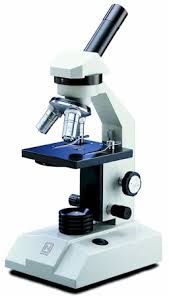
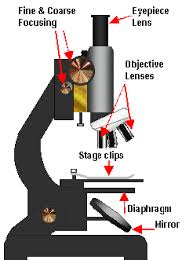
A microscope is an object that is used to see something to small for the unaided eye to see.
Microscopes can be separated into three classes: optical theory microscopes (Light microscope), electron microscopes and scanning probe microscopes.
Optical microscopes are the simplest to use this is why they are used the most.
Electron microscopes use electrons to create an enlarged image.

Scanning probe microscopes forms images of surfaces by using a physical probe.

Microscopes can be separated into three classes: optical theory microscopes (Light microscope), electron microscopes and scanning probe microscopes.
Optical microscopes are the simplest to use this is why they are used the most.
Electron microscopes use electrons to create an enlarged image.
Scanning probe microscopes forms images of surfaces by using a physical probe.
week 4 : Chromatography
Chromatography is a chemical technique for separating mixtures of coloured chemicals. Forensic scientists use chromatography to separate the different coloured pigment in writing ink to find out which pen was used which will help solve the case.

Paper Chromatography
You draw a pencil line about 2cm from the bottom of the blotting paper all the way across. Then reprisent the number of pens you are testing as crosses, put a small dot of each pen on to the crosses. Put a small amount of water into a beaker then stand the paper up in it, leave it for a short amount of time. Each of the pens colours will have separated into other colours : as shown in the picture above.
Subscribe to:
Comments (Atom)